Γράφει ο Ανδρέας Σταλίδης.
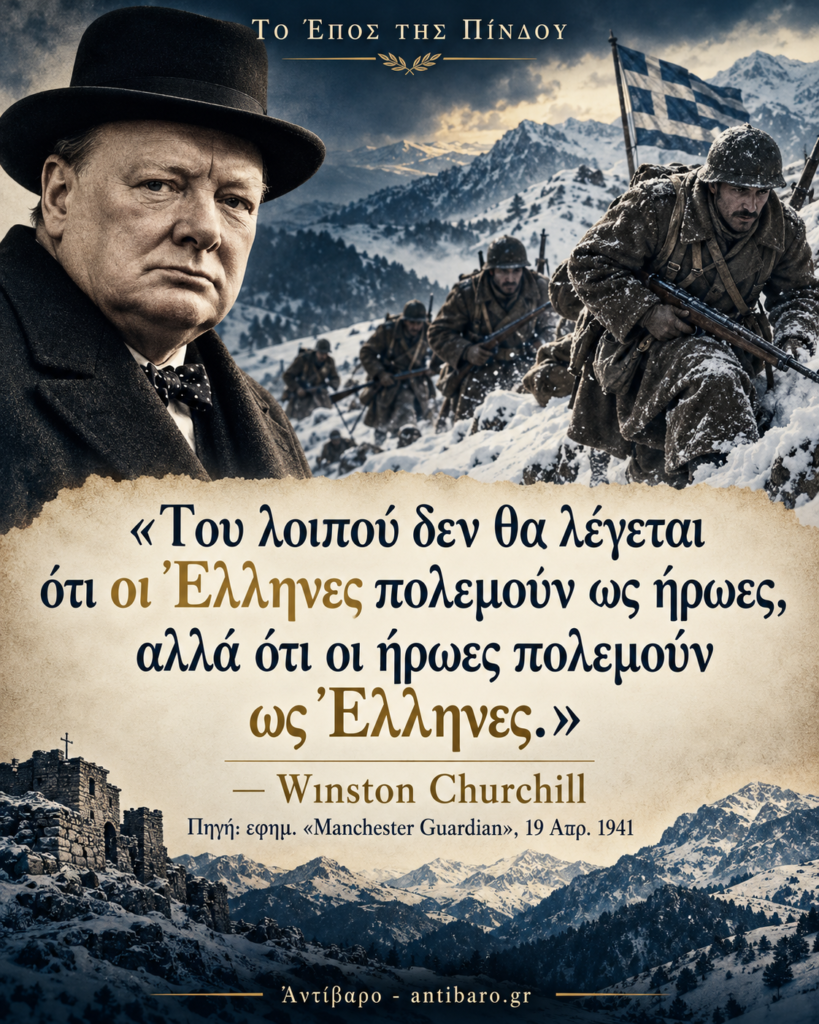
Το είπε ή δεν το είπε ο Τσώρτσιλ;
Εδώ τι λένε οι πηγές περί της δήλωσης του Τσώρτσιλ για τους ήρωες και τους Έλληνες.
✅1. Στις 22 Φεβρουαρίου 1944 ο Τσώρτσιλ σε ομιλία του στο Βρετανικό Κοινοβούλιο είπε τα εξής:
Everyone can recall the sentiments of admiration which the heroic defence of Greece, first against the Italians and then against the German invader, aroused throughout the civilised world.
Δηλαδή μίλησε για την «ηρωική άμυνα της Ελλάδας, πρώτα εναντίον των Ιταλών και έπειτα εναντίον των Γερμανών εισβολέων, η οποία προκάλεσε τον θαυμασμό ολόκληρου του πολιτισμένου κόσμου».
Πηγή από τα επίσημα πρακτικά εδώ – https://api.parliament.uk/historic-hansard/commons/1944/feb/22/war-and-internationa-situation
✅2. Στις 5 Νοεμβρίου 1940, 8 μόνο ημέρες μετά το ΟΧΙ, ο Τσώρτσιλ σε ομιλία του στο Κοινοβούλιο αναφέρθηκε στο
the small but famous and immortal Greek nation.
δηλαδή στο «μικρό αλλά ένδοξο και αθάνατο ελληνικό έθνος»
Η αμέσως επόμενη φράση του ήταν αυτή
Without the slightest provocation, with no pretence at parley, Signor Mussolini has invaded Greece, or tried to do so, and his aircraft have murdered an increasing number of Greek civilians, women and children, in Salonika and many other open Greek towns. The Greek King, his Government and the Greek people have resolved to fight for life and honour, and lest the world should be too easily led in chains.
Πηγή από τα επίσημα πρακτικά εδώ : https://api.parliament.uk/historic-hansard/commons/1940/nov/05/war-situation
✅3. Στις 18 Απριλίου 1941, στην εφημερίδα The Manchester Guardian, ο Έλληνας διπλωμάτης Δημήτριος Κακλαμάνος έγραψε την περίφημη φράση που αναπαράγεται από τότε:
“It was rightly said that ‘people will not say any more that the Greeks fight like heroes but heroes fight like Greeks.’”
Πηγή – https://quoteinvestigator.com/2022/06/15/heroes-greeks
To “it was rightly said” είναι μετέωρο, αόριστο και δεν έχει διευκρινιστεί σε ποιον το απέδιδε ο διπλωμάτης. Πάντως, έτσι όπως είναι γραμμένο, είναι σαν να το μεταφέρει από άποψη άλλου.
✅4. Στις 28 Οκτωβρίου 1942, στην επέτειο δύο ετών από το ΟΧΙ του 1940 ειπώθηκε στο ραδιόφωνο του BBC η φράση
«…Αν άλλοτε λέγαμε ότι οι Έλληνες μάχονται σαν Ήρωες, τώρα θα λέγωμεν ότι οι Ήρωες μάχονται σαν Έλληνες.»
Μία πηγή επιβεβαίωσης ότι πράγματι υπάρχει αυτό το ακουστικό ντοκουμέντο στο BBC στα αγγλικά είναι αυτή εδώ
https://www.richardlangworth.com/greeks-fight-like-heroes
η οποία όμως συμπληρώνει ότι «η φωνή όμως δεν μοιάζει να είναι του Τσώρτσιλ».
(βεβαίως, ο ίδιος ο Τσώρτσιλ δεν έκανε μετάδοση στο BBC, απλά ο εκφωνητής εξέφραζε το κλίμα της εποχής στην Βρετανία, ειδικά την ημέρα της επετείου)
✅5. Την ίδια ακριβώς ημέρα, 28 Οκτωβρίου 1942 στην Καναδέζικη εφημερίδα The Montreal Daily Star, στη σελίδα 16, τέταρτη στήλη γράφεται σε ένα άρθρο το εξής
A fighting French spokesman said that two years ago today, Benito Mussolini gave orders for 45,000 Italian soldiers to attack 7,000 Greeks. “The Greeks fought with such gallantry,” he said, “that since the Italian-Greek war one does not say, ‘the Greeks are fighting like heroes,’ but ‘the heroes are fighting like Greeks’. “As for the Italians, one still says, ‘the Italians are fighting like Italians’.”
1942 October 28, The Montreal Daily Star, Delivery Near, Greeks Told, Quote Page 16, Column 4, Montreal, Quebec, Canada. (Newspapers_com)
Πηγή εδώ, 4η αναφορά – https://quoteinvestigator.com/2022/06/15/heroes-greeks
✅6. Στις 26 Ιανουαρίου 1948 στο “Lincoln Evening Journal” η Βασίλισσα Φρειδερίκη είπε το εξής
They went clear up to Konitsa. The soldiers couldn’t believe their eyes when they saw the queen. She spoke to them all, went into the homes where the wounded were staying, and spoke to them as she passed thru the streets. She told them, ‘You are Greeks who fought like heroes, but henceforth the people will speak of “heroes who fought like Greeks.”’
1948 January 26, Lincoln Evening Journal, More Or Less Personal: A Chat with the Editor, Quote Page 6, Column 3, Lincoln, Nebraska. (Newspapers_com)
Πηγή (7η αναφορά) – https://quoteinvestigator.com/2022/06/15/heroes-greeks
✅7. Στις 30 Οκτωβρίου 1951, στην εφημερίδα “The Gazette” του Μόντρεαλ στον Καναδά, ένας αναγνώστης συνδέει την φράση με τον Τσώρτσιλ γράφοντας
The Greeks, during that period, repeated once more the epic struggle against Fascism in the same willing and brave manner that in 1941 inspired the great statesman, W. Churchill, to say that “from now on instead of saying the Greeks fight like heroes we shall say the heroes fight like Greeks.”
1951 October 30, The Gazette, Section: Letters From Our Readers, Letter title: Greece’s Fight Against Communism, Letter from: S. Bacarinos, Quote Page 3, Column 6, Montreal, Quebec, Canada. (Newspapers_com)
Πηγή (αναφορά 8) – https://quoteinvestigator.com/2022/06/15/heroes-greeks
✅8. Στις 29 Μαΐου 1961 στην εφημερίδα The Stars and Stripes γράφεται το εξής
In the early stages of World War II, the then prime minister of Britain, Sir Winston Churchill, remarked, “until now we believed that the Greeks fought like heroes. Hereon we shall believe that heroes fight like Greeks.”
1961 May 29, The Stars and Stripes – European Edition, Tough Greek Fighting Men Add Might to NATO, Quote Page 8, Column 1, Darmstadt, Germany. (NewspaperArchive) ↩︎
Πηγή (αναφορά 9) – https://quoteinvestigator.com/2022/06/15/heroes-greeks
✅9. Στις 6 Φεβρουαρίου 1964 στην Evening Standard γράφεται το εξής
Regarding the comparison of the Greek army with the Turkish army, I will merely quote the phrase of the most glorious man of the Second World War, who said, “The heroes fight like the Greeks.”
1964 February 6, Evening Standard, Section: Letters, Letter from: Demetrius Ambropoulos, Quote Page 7, Column 6, London, England. (Newspapers_com) ↩︎
Πηγή (αναφορά 10) – https://quoteinvestigator.com/2022/06/15/heroes-greeks
✅10. Στις 5 Ιουλίου 1975 στην The Daily News of Johnson County του Kansas γράφεται το εξής
The Greeks, our true, faithful ally, fought so valiantly that Winston Churchill said, “History hereafter will not record that the Greeks fought like heroes but that heroes fought like Greeks”.
1975 July 5, The Daily News of Johnson County, Section: Letters, Letter title: What subtle power, Letter from: Michael D. Konomos, Quote Page 5, Column 1, Olathe, Johnson County, Kansas. (Newspapers_com) ↩︎
Πηγή (αναφορά 11) – https://quoteinvestigator.com/2022/06/15/heroes-greeks
✅11. Στις 23 Οκτωβρίου 1986 στην The Hellenic Chronicle της Μασσαχουσέτης γράφεται το εξής
. . Greeks about whom the prime minister of Great Britain, Winston Churchill, said: ‘We learned from history that the Greeks fought like heroes.’ The lesson drawn from the last world war is that ‘heroes fought like Greeks.’ The reason Prime Minister Churchill said what he did is that a small contingent of Greeks tore the Berlin-Rome axis into pieces, an achievement that was a real eye-opener to the allies.
1986 October 23, The Hellenic Chronicle, Oxi still rings out, Quote Page 4, Column 1, Boston, Massachusetts. (Fulton History) ↩︎
Πηγή (αναφορά 12) – https://quoteinvestigator.com/2022/06/15/heroes-greeks
🍒ΚΕΡΑΣΑΚΙ ΣΤΗΝ ΤΟΥΡΤΑ!
✅12. Στις 25 Οκτωβρίου 1995, ο Βρετανός βουλευτής Edward O’Hara επανέλαβε στη Βουλή των Κοινοτήτων αυτήν την φράση και ολοκάθαρα την απέδιδε στον Τσώρτσιλ
«The British of the second world war generation had no doubt about our debt to Greece. Winston Churchill remarked at the time that one should not say so much that the Greeks fight like heroes as that heroes fight like Greeks.»
Πηγή πάλι από τα επίσημα πρακτικά του Κοινοβουλίου, εδώ – https://api.parliament.uk/historic-hansard/commons/1995/oct/25/greece
🎯Συμπέρασμα.
Ο ίδιος ο Τσώρτσιλ δεν φαίνεται να είπε την φράση αυτή λέξη προς λέξη. Όμως αποδεδειγμένα, από την πρώτη στιγμή (8 ημέρες μετά το ΟΧΙ στο Κοινοβούλιο), αλλά και αργότερα, εξέφραζε το ίδιο νόημα και τον ίδιο θαυμασμό που εκπέμπει και η φράση αυτή για τον ηρωισμό των Ελλήνων. Η φράση γράφτηκε για πρώτη φορά το 1941 χωρίς να διευκρινίζεται ποιος την είπε, διότι ο διπλωμάτης που την έγραψε το άφησε αόριστο. Έναν χρόνο μετά, το 1942, η ίδια φράση ειπώθηκε στον αέρα του Βρετανικού BBC, οπότε μπορεί να ειπωθεί ότι εξέφραζε το κλίμα των ανθρώπων της εποχής. Την ίδια ημέρα, η ίδια φράση τυπωνόταν στον Καναδά. Το 1951 συνδέθηκε για πρώτη φορά η ακριβής φράση με τον Τσώρτσιλ, και έκτοτε έγιναν αρκετές αναφορές, με αποκορύφωμα τον Βρετανό βουλευτή το 1995 μέσα στη Βουλή των Κοινοτήτων.