

Written by The Greco-Syrian Nation on Facebook.
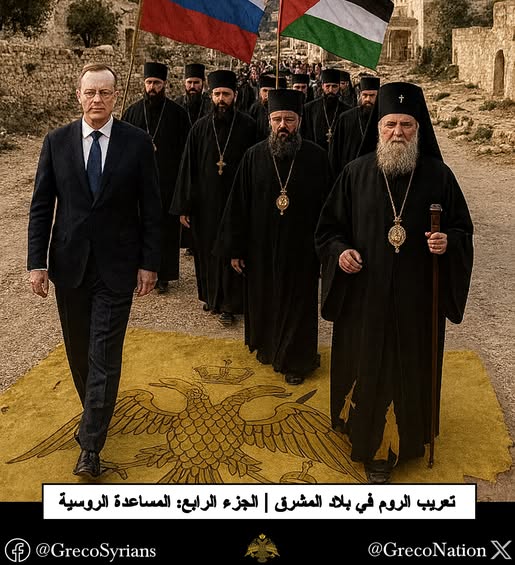
Many of us Levantine Rum may not be aware that our “Arab” identity was not a natural evolution, but a deliberate construct encouraged by foreign empires, both Western and Eastern. This manipulation was orchestrated to prevent a broader Rum national awakening.
By the 1870s, Russia was already sowing seeds of division within the Orthodox world. As the Bulgarian Schism was unfolding, Russia was actively stirring discontent among Arabophone Rum in Jerusalem against the Brotherhood of the Holy Sepulchre and the Patriarch. The Ottomans, in response, enacted a new law in 1875, making some minor concessions to pro-Russian Arab nationalist laity, while maintaining overall Greek control. [The Ottoman Basic Law of 1875, in response to protests from the Arabophone subjects (especially within the Greek Orthodox Church in Palestine), granted minor concessions such as the establishment of local pastoral councils to manage community affairs and revenues, and the creation of mixed (Greek/Arab) administrative councils, aiming to balance power and address demands for participation in church administration. However, it largely failed to give the Arabophones a significant voice in the election of patriarchs, thus maintaining Greek dominance.] Nevertheless, Russian support lent legitimacy to Arab nationalist voices, even if it did not immediately bring about substantial change.
While Western ethnographers were still classifying Levantine Rum as “Greeks” (like Alexander Synvet in 1878), Russia doubled down. In 1882, it founded the Imperial Orthodox Palestine Society, which changed everything:
 Russia opened Arabic-language schools in villages and cities, educating both boys and girls. It sent young Arabic-speaking Orthodox Christians to Russia for higher education, grooming them to become proponents of Arab nationalism upon their return. It built churches and monasteries and supported pro-Russian Arabophone clergy to strengthen its religious influence.
Through these schools and networks, Russia deliberately redefined our identity. Instead of Rum as part of Romiosini—Christian Hellenism rooted in Byzantine-Greek and Ancient Greek culture—Russia and the West pushed us to see ourselves as “Orthodox Arabs” or “Arameans.” The goal was to undermine any sense of shared nationhood with Greeks in Greece (i.e., Hellenophone Rum) and to prevent the spread of Greek nationalism in the Levant.
Therefore, what we hear today about our “Rum” identity being a purely religious or cultural term is, in essence, the product of a Russian-Western strategy to redefine the identity and civilization of the Rum, to suppress the Megali Idea, and to keep our Levantine Rum people detached from our Greek heritage.
 Sources:
[1] Παύλος Καρολίδης, Περί της εθνικής καταγωγής των ορθοδόξων χριστιανών Συρίας και Παλαιστίνης. Εν Αθήναις: Τύποις Π. Δ. Σακελλαρίου, 1909.
[2] Katz, Itamar; Kark, Ruth (4 November 2005). “The Greek Orthodox Patriarchate of Jerusalem and Its Congregation: Dissent over Real Estate”. International Journal of Middle East Studies. Cambridge University Press. 37 (4): 509–534.
[3] Tamari, Salim. “Issa al Issa’s Unorthodox Orthodoxy: Banned in Jerusalem, Permitted in Jaffa”. Institute for Palestine Studies.
[4] Robson, Laura (2011). Colonialism and Christianity in Mandate Palestine. University of Texas Press.
[5] Synvet, Alexander (1878). Les Grecs de l’Empire ottoman: Etude statistique et ethnographique. L Orient illustre, Constantinople.
[6] Najim, Fr. Michel; Frazier, T.L. “Antioch: A brief history of the Patriarchate of Antioch”. <http://najim.net/ANTIOCHhistoryencyclopedia.pdf>
[7] Kildani, Hanna (2010). Modern Christianity in the Holy Land. AuthorHouse.
In Arabic
عريب الروم في بلاد المشرق | الجزء الرابع: المساعدة الروسية

قد لا يدرك الكثيرون منا، نحن الروم في بلاد المشرق، أنما يدعى بهويتنا “العربية” لم تكن تطورا طبيعيا، بل كانت بتخطيط و بناءً مُتعمّد شجّعته إمبراطوريات أجنبية، غربية وشرقية على حد سواء. وقد نُظّمت هذه المناورة لمنع نهضة وطنية قومية أوسع للروم.
بحلول سبعينيات القرن التاسع عشر، كانت روسيا قد بدأت بالفعل في زرع بذور الانقسام داخل العالم الأرثوذكسي. ومع تصاعد الانشقاق البلغاري، كانت روسيا تُثير بنشاط السخط بين الروم الناطقين بالعربية في اورشليم ضد أخوية القبر المقدس والبطريرك. ورداً على ذلك، سنّ العثمانيون قانوناًجديداً عام 1875، قدّموا فيه بعض التنازلات الطفيفة للمستعربين الموالين لروسيا [قد منح القانون الأساسي العثماني لعام 1875، استجابةً لاحتجاجات المستعربين من الرعية (وخاصة داخل الكنيسة الأرثوذكسية الرومية (اليونانية) في فلسطين، تنازلات طفيفة مثل إنشاء مجالس رعوية محلية لإدارة شؤون المجتمع وإيراداته، وأنشاء مجالس إدارية مختلطة (يونانية(رومية)/عربية)، بهدف تحقيق التوازن في السلطة وتلبية المطالب بالمشاركة في إدارة الكنيسة، على الرغم من أنه فشل إلى حد كبير في منح المستعربين رأياً مهماً في انتخاب البطاركة، مما حافظ على الهيمنة الرومية( اليونانية)] ، لكن الدعم الروسي منح شرعية لأصوات المستعربين، حتى وإن لم يُحدث تغييراً جوهرياً فورياً.
عندما كان علماء الإثنوغرافيا(واصفي الأعراق في بقعة جغرافية ما) الغربيون لا يزالون يصنفون الروم المشرقيين ك “يونانيين” (كما فعل ألكسندر سينفيت عام 1878)، ضاعفت روسيا من جهودها. ففي عام 1882، أسست الجمعية الروسية الفلسطينية، التي غيرت كل شيء:
افتتحت روسيا مدارس باللغة العربية في القرى والمدن، لتعليم البنين والبنات.أرسلت شباب الروم الناطقين بالعربية إلى روسيا لتلقي التعليم العالي، وصقلتهم ليصبحوا دعاة للعروبة عند عودتهم.شيدت الكنائس والأديرة ودعمت رجال الدين المستعربين الموالين لروسيا لتعزيز نفوذها الديني.من خلال هذه المدارس والشبكات، أعادت روسيا تعريف هويتنا عمدا. فبدلا من اعتبار الروم جزءا من الرومية – أي الهيلينية المسيحية المتجذرة في الثقافة الروميةالبيزنطية (اليونانية) و الثقافة اليونانية القديمة – دفعتنا روسيا و الغرب إلى اعتبار أنفسنا “عربًا أرثوذكس” أو “آراميين”. كان الهدف من ذلك هو تقويض أي شعور بالانتماء القومي المشترك مع الروم (اليونانيين) في اليونان، (أي مع الروم الناطقين باليونانية)، ومنع انتشار القومية اليونانية في بلاد المشرق.
لذا، فإن ما نسمعه اليوم عن هويتنا “الرومية”على انها مصطلح ديني أو ثقافي بحت، هو في جوهره نتاج استراتيجية روسية-غربية كوسيلة لإعادة تعريف هوية الروم وحضارتهم، وإيقاف الفكرة الكبرى، وإبقاء شعبنا الرومي المشرقي منفصل عن تراثنا الرومي (اليوناني).